Lower Maintenance
No weekly mowing, heavy watering, fertilizing, or muddy lawn recovery after storms.

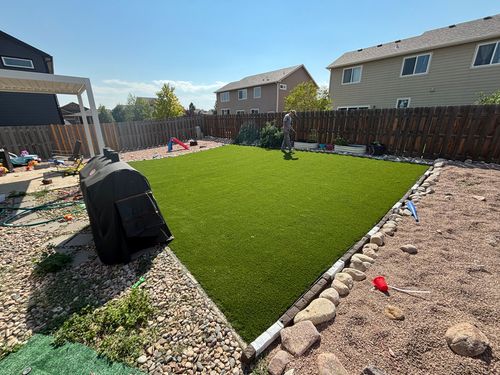
Upgrade muddy, high-maintenance grass with a clean synthetic lawn built for Colorado sun, snowmelt, drainage, and everyday family use.
Indy Artificial Turf & Landscaping installs artificial grass for Denver-area homeowners who want a yard that looks finished year-round. The focus is proper grading, compacted base, drainage, clean edging, and turf that fits how the space will actually be used.
Locally Owned
For homeowners, the practical difference is simple: you are not just filling out a form for a national call center. Dominic's local team can look at the yard, talk through drainage and budget, and keep the install accountable from quote to walkthrough.
Design Inspiration
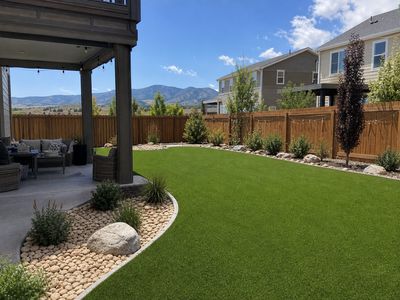
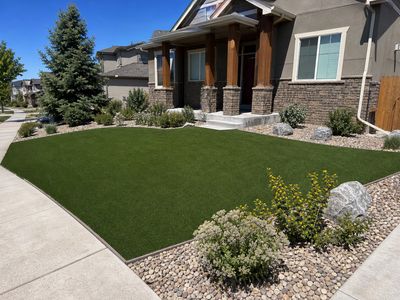
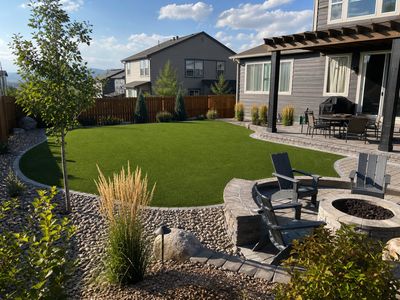
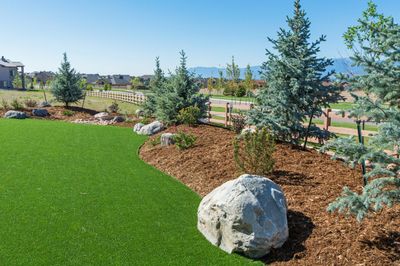
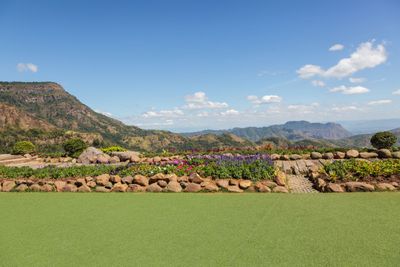
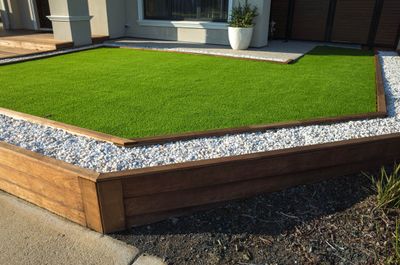
These realistic examples show how artificial turf can support curb appeal, outdoor living, and a cleaner backyard without feeling overbuilt.
Project Photos
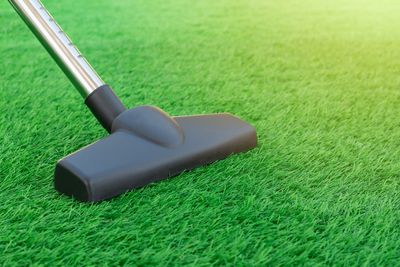
More project images from Indy, including finished lawns, landscape edges, and installation work.
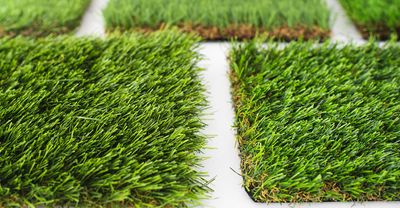
No weekly mowing, heavy watering, fertilizing, or muddy lawn recovery after storms.
Artificial turf can sharply reduce outdoor water use compared with natural grass.
Base prep is planned for snowmelt, runoff, and freeze-thaw movement.
No routine pesticides, fertilizers, or gas-powered mowing needed for the turf area.
A finished green lawn can improve the look and usability of high-traffic areas.
Indy uses Dominic's trained crew instead of passing the install to a random subcontractor.
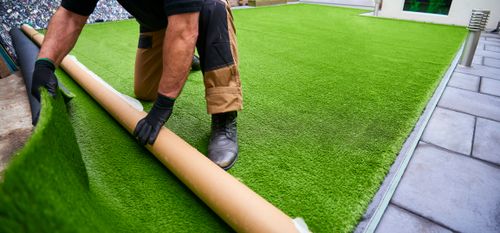
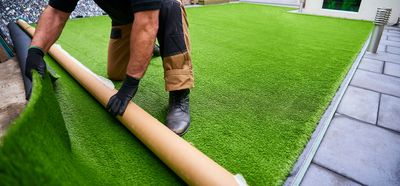
A good turf install starts below the surface. Indy walks through the layout, edges, drainage strategy, and turf choice before installation begins so the final yard fits the property instead of just covering it.
Before / After Example
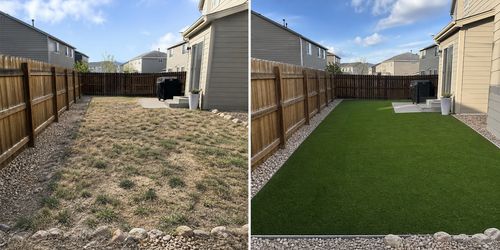
A common project starts with dry, patchy grass in a normal fenced backyard and finishes as a cleaner low-maintenance lawn with simple rock borders and usable space.
A focused process keeps the quote clear, the prep work right, and the finished yard ready for Colorado weather.
Review the yard, access, drainage, square footage, and intended use.
Choose the turf style and infill approach that fits the project.
Excavate, grade, compact, and prepare a stable draining base.
Cut, secure, seam, infill, and groom the turf for a clean finish.
Review care, cleanup, and final details before the project wraps.
I recently had artificial turf installed in my backyard and had a great experience with this company from start to finish. Their communication was clear, consistent, and timely, they kept me updated throughout the entire process and were always available to answer questions. The team executed the project efficiently and with great attention to detail in one...
An outstanding job by Indy! The Indy team, from Yann (sales) to Dom (Installation), was excellent! The pricing was a selling point, but the installation team was excellent, courteous, very informative, and finished on-time. I would high-recommend Indy! Yann spent the time, and even returned with another sample, to help us in our decision. Thank you very...
The days of mowing our lawn have officially come to and end. After a few months of researching and thinking about it, we finally decided to go ahead and install artificial turf in our back yard. The guys at Indy were very professional, quick, and always willing to answer any questions we had. Well worth the investment!
Short answers for the things people usually want to know before booking a turf estimate.
With proper base prep and high-quality materials, many homeowners can expect roughly 15 to 20 years of useful performance.
It can warm up in direct sun, but turf selection, lighter infill, shade, and occasional rinsing can help keep the surface more comfortable.
Most yards only need debris removal, occasional brushing, and rinsing in high-use areas.
Modern turf options are designed for daily home use, with non-toxic options available for family and pet areas.
Installation works best in moderate conditions because the turf needs to lay and settle properly. Sudden temperature swings can make scheduling harder.
A properly built turf system gives rodents and pests fewer places to burrow or nest than loose dirt or weak natural grass areas.
No. Unlike natural grass, artificial turf should not leave green grass stains on clothing.
The upfront cost is higher, but many homeowners save over time because they reduce watering, mowing, fertilizing, and lawn repair.
Some older systems used crumb rubber, which raised heat and health concerns. Modern residential installs can use safer options like silica sand or natural infills.
Tell Indy about your Denver-area turf project and the approximate size of the space.